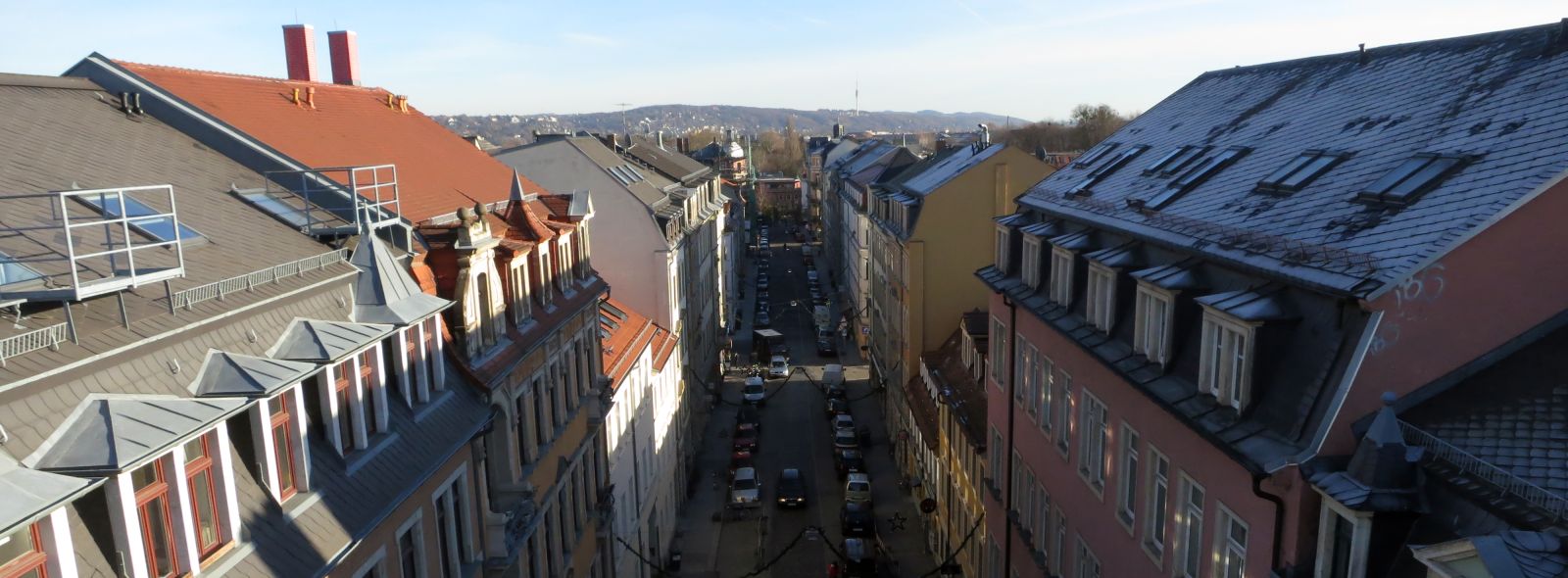

At first glance, Dresden-Neustadt is simply the part of Dresden that lies north of the River Elbe. But the distinction is a little more complicated, as there are three different geographical and administrative terms:
- the Neustadt cadastral district (Gemarkung Neustadt)
- the Neustadt administrative district (Stadtbezirk Neustadt)
- the neighbourhoods of Äußere Neustadt and Innere Neustadt (Outer and Inner Neustadt)
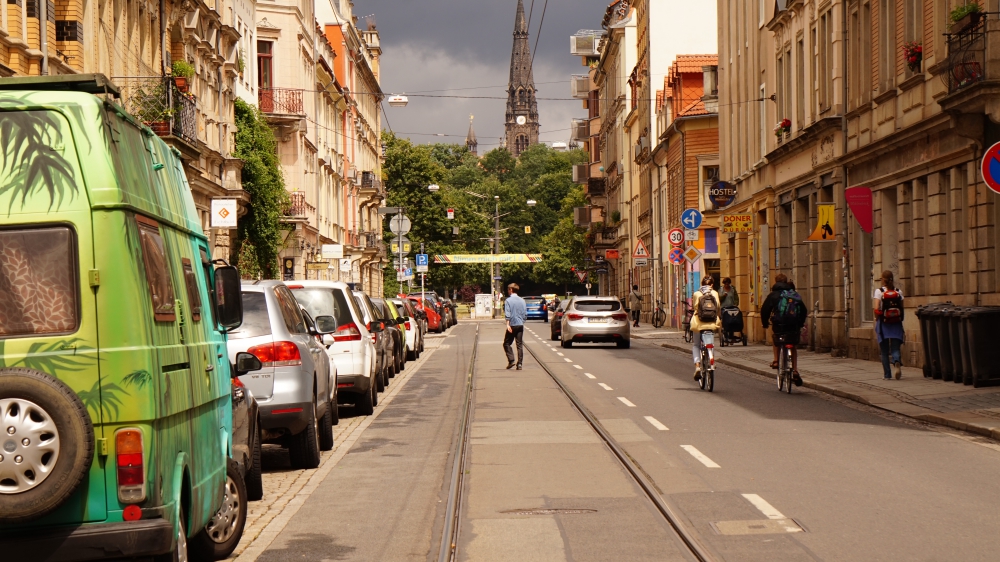
The Neustadt administrative district comprises five neighbourhoods: Äußere Neustadt, Innere Neustadt, Radeberger Vorstadt, Leipziger Vorstadt and Albertstadt. Neustadt-Geflüster covers the entire district, with a particular focus on Äußere Neustadt, also known as Antonstadt, named after King Anthony of Saxony, who reigned in the 19th century.
The neighbourhood lies between Dresden city centre and the Dresdner Heide, a large area of woodland to the north-east. In an occasional series, we introduce the streets, squares and bridges throughout the district. You can find an overview here. Further information about the Neustadt district is available on dresden.de.
Dresden-Neustadt: flourishing in the 19th and 20th centuries
The history of Dresden’s Neustadt stretches back to the Middle Ages. However, Äußere Neustadt, as we know it today, largely took shape during the 19th century. Before that, the area was known as „Auf dem Sande“ („On the Sand“), a reference to its sandy soil.
During the 18th century, a suburb developed here. In 1835, it was incorporated into Dresden under the name Antonstadt. Around 1900, the neighbourhood experienced a major building boom. Most of the buildings still standing today date from this period.
Neustadt-Geflüster has already published two articles about the history of Dresden-Neustadt: „Sumpf und Sand“ („Swamp and Sand“) and „Gründerjahre sind keine Herrenjahre“ („The Boom Years Were No Easy Ride“).
A detailed account of the history of Äußere Neustadt can be found in the archives of Dresden-Neustadt online. A shorter but equally well-researched historical overview by Una Giesecke is available on the website of the Äußere Neustadt Foundation. Our contributor Heinz Kulb shares entertaining historical anecdotes in his regular „100 Years Ago“ column.
Äußere Neustadt covers an area of approximately 1.15 square kilometres. At the end of 2024, it had 18,282 residents. The entire Neustadt administrative district had a population of 54,433, spread across 1,479 hectares (figures as at December 2024).
Äußere Neustadt is home to a predominantly young population. In 2024, the average age was 34.8 years, and almost two-thirds of households consisted of just one person. Only 996 residents were aged 65 or over. (Source: Dresden Neighbourhood Statistics 2024, PDF.)
A lively neighbourhood for nightlife and culture
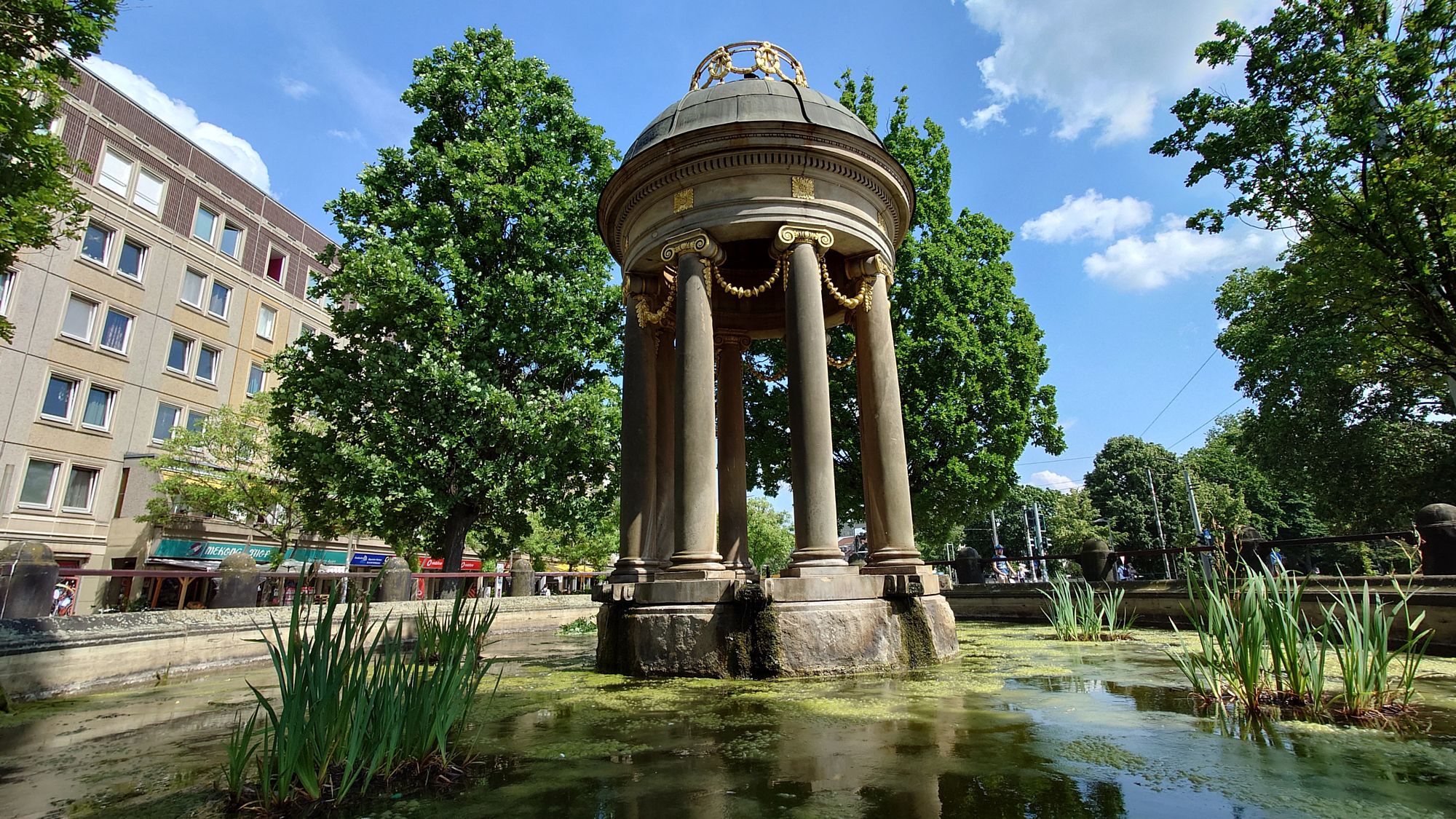
Äußere Neustadt is widely regarded as Dresden’s alternative cultural and nightlife quarter. It is home to well over a hundred pubs and bars, as well as numerous clubs, theatres and cinemas. No other neighbourhood in Dresden has a higher concentration of art galleries.
The area is also home to a range of fashion, furniture and interior design shops. Industrial businesses have largely disappeared from the neighbourhood. One of the best-known exceptions is the toothpaste manufacturer Dental Kosmetik, based on Katharinenstraße.
Neighbouring districts
Äußere Neustadt borders Innere Neustadt to the south, home to the Baroque Quarter (Barockviertel). To the east lies Radeberger Vorstadt, including the Prussian Quarter (Preußisches Viertel). To the west is Leipziger Vorstadt, with its Hechtviertel and Scheunenhofviertel neighbourhoods. To the north lies Albertstadt, including the former industrial area known as Industriegelände.
All these neighbourhoods feature in Neustadt-Geflüster’s local reporting. For news from areas further west, we recommend Pieschen-Aktuell. On the other side of the Elbe, the local online publications Johannstadt.de and Friese-Journal provide further coverage.